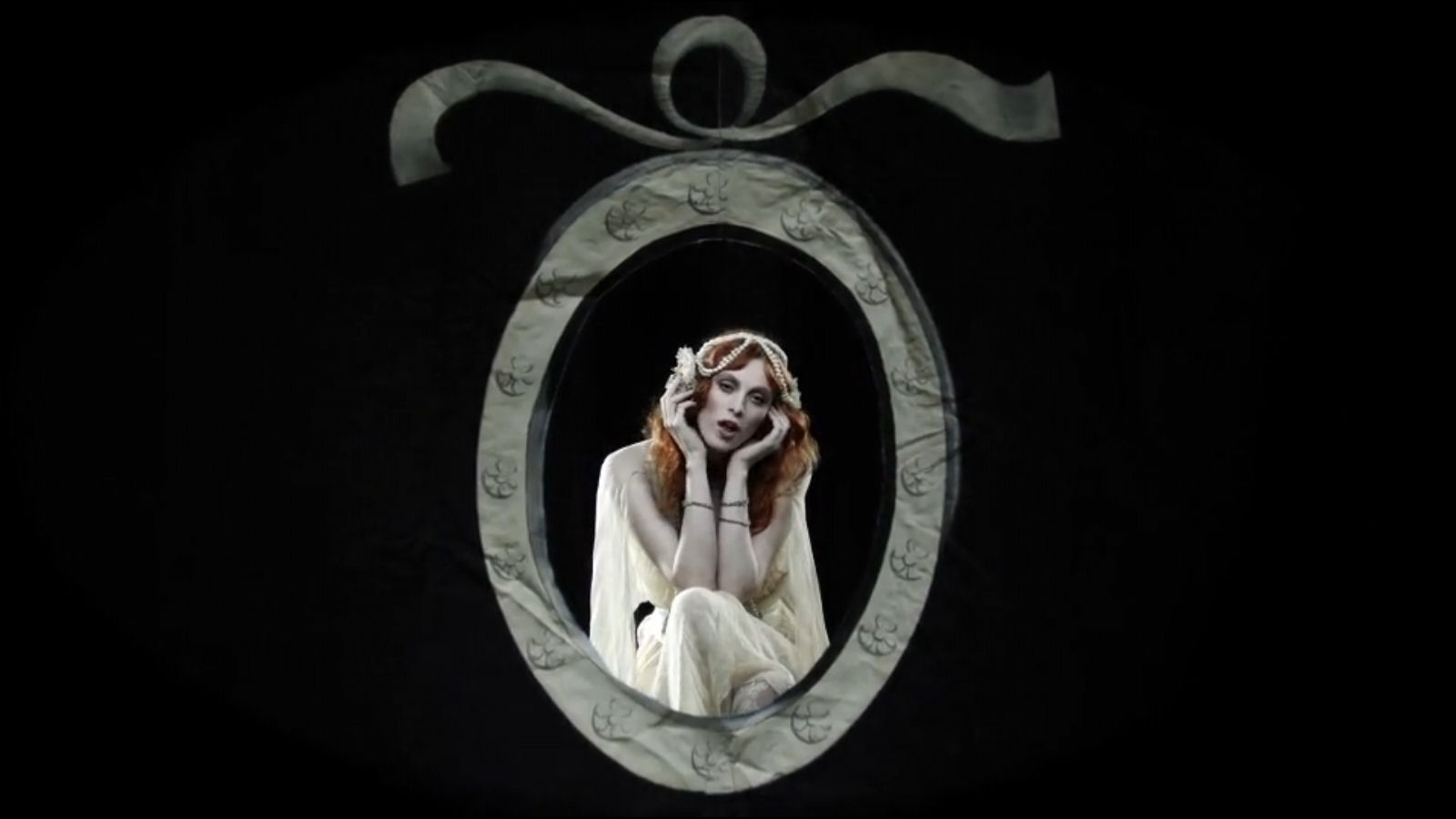
(I've actually had this post written in notes and jotted concepts form for over a year now, but I just never got around to posting it!)
Over a year ago, there was a
query on a Steampunk costuming group I belong to on Live Journal. The person wanted to know if there was any way she could wear a Pre-Raphaelite / Aesthetic style gown to a Steampunk event without seeming to be headed to a Renaissance Faire. The question prompted a discussion of the Pre-Raphaelites and Steampunk, and I was shocked by the vehement reaction the whole idea stirred in me. Any time I find myself responding to something so passionately and angrily, I like to investigate it further. You see, I've always maintained that although I have a great admiration for the technical and costume side of Steampunk (hence why I'm on the LJ list), it just isn't for me.
I love the Victorian era, but I personally prefer my Victorians with fairies, myths, and Romance, rather than with cogs, steam, and technology. My response to the question of melding the two stirred in me a sort of psychological "turf war"...."
Stay away from my Brotherhood with your goggles and cogs!!"
So what do the Pre-Raphaelites and Steampunk have in common? The straightforward and initial answer I thought was "absolutely nothing: They are anathema to each other." The Pre-Raphaelite code of life was for art to reflect nature. Nature is romanticized. In the Steampunk code of life, technology is transformed into art. Technology is romanticized. It doesn't get a lot more dualistic than nature vs. technology.
However, upon further contemplation, and after I talked with a friend about my knee-jerk reaction and she commented that "Steampunk is the Arts and Crafts Movement of today", I had to admit that the issue wasn't as black and white as it appeared. The two philosophies do have some similar ground, especially in the Arts & Crafts movement founded by the Brotherhood's second-generation member, William Morris. I still may wholeheartedly object to the idea someone mentioned on Live Journal of William Morris being a father of Steampunk. To me, that would be like saying Ann Coulter is the mother of Democrats. But I must admit, the two movements...William Morris' Arts & Crafts and modern-day Steampunk...
do have more in common than one may at first think. This is, of course, highly ironic, since Steampunk is all about technology, and technology and industry were what Morris most hated. But still, both genres feature....
-A Nostalgic look back at the past. Both philosophies despair at certain aspects of what was for them "modern" life, and instead look back at what was for them "simpler" times, attempting to blend that romantic era with modern existence. For William Morris, this was the medieval times, but the fashions of that era were still reinterpreted for the modern Victorian man and woman (Aesthetic Movement clothing). Similarly, the tools, furniture, and handiwork of the medieval times were created by Morris using some technology not found in medieval times, and with an end result that often reflected the Victorian aesthetic as well as the medieval. For Steampunk aficionados, the Victorian era of William Morris
is the simpler time that is romanticized. Modern technology is re-conceived in the context of a time when people still wrote each other letters with ink and paper, there was still a code of etiquette followed by almost all of society.
-A respect for the handmade. This is, in my opinion, the area in which the two philosophies most successfully converge. The Arts & Crafts movement was founded on the concept of distain for the mass-produced, shoddily made items that were a hallmark of the Industrial Revolution. And Steampunk (when it's more than just buying a Nerf gun and spray painting it copper) is all about creating something
by hand, with a nostalgic and old look. As
Bruce Sterling says in his guide to Steampunk, "The heaviest guys in the Steampunk scene are not really all that into 'steam'. Instead, they are into punk. Specifically, punk's do-it-yourself aspects, and its determination to take the means of production away from big-mind-deadening companies who want to package and sell shrink-wrapped cultural product."
Ironically, William Morris created a style so successful in his times, that there were many a mass-produced, shoddily made copy of his work. Similarly, Steampunk has reached such heights of success, it is easy to obtain an entire Steampunk-style ensemble made from industrial hands. But the soul and heart of both philosophies emphasize the craft of hand-made items.
-
Recycling. William Morris was the father of the Society for the Protection of Ancient Buildings. He felt that many things became more beautiful through the wear and tear of the ages. Steampunk is also about taking bits and pieces of old items...old clothes, old watches, old bits and pieces once discarded, and transforming them into something new, so that we can see their beauty again.
-
A movement across multiple disciplines that began in the arts. For Arts & Crafts, it began with Pre-Raphaelite art. It then progressed to concepts of anti-industrialization and homemade goods, as well as dress reform and romanticized philosophies. With Steampunk, it began in literature (the works of authors like H.G. Wells etc), and progressed across philosophy and both event costuming and daily wear,
home interiors, etc.
-
A fear or concern for what modern society has become. This similarity is by far the most ironic, as I briefly mentioned above. William Morris expressed his concern for modern society by a deep-rooted distain for modern industrialization and modernization. On a Steampunk message board online,
someone wrote, "I'm holidaying in Edinburgh for a few days and large parts of it are incredibly steamy. However, if I chose one [Steampunk landmark], it would have to be the Forth Bridge. Opened in 1890, it is said that William Morris described it as 'the supremest specimen of all ugliness', confirming for me its Steampunk credentials!" Many Victorian landmarks specifically despised by William Morris now, to us, seem simple and romantic. These locations that are hold-outs from Victorian industrial technology make perfect backdrops for Steampunk photo shoots...and ironically are simultaneously the areas that would have made Morris violently ill to see.
So the irony is, as I've mentioned, Steampunk is responding to modern technological society by returning to an earlier era when technology was newer and more romantic, while Morris responded in his era to the technology Steampunkers adore by...returning to an earlier era of handmade production in medieval times that he deemed more romantic. Steampunk and William Morris both dealt with the same question. Their answers to that question just varied as widely as nature and technology can. Again,
Bruce Sterling's article put it succinctly and accurately: "The Industrial Revolution has grown old. So machines that Romantics considered Satanic now look romantic." "Successful steampunks are not anti-industrial as Ruskin was. They are digital natives and therefore post-industrial."
This brings me to a quote from a novel I read last year and
reviewed here at TBN. "She hadn't fully appreciated this aspect of history before now. The further back the story went, the more possible it was to give it a romantic glow that blurred the edges and made the awful more palatable. Though she had been through all the documents, read the letters and poems, examined the paintings, somehow that was different than the cold, stark, black-and-white typeface with an accompanying photo on page A2." There is a comfort in the patina of time...a comfort that takes away both the dirt and disease of the medieval times for Morris, and the grime and disease of the Victorian era for us today.
So I have to look again and re-analyze my knee-jerk reaction to the idea of Steampunk and the Brotherhood coexisting. Steampunk does still seem rather trendy to me. I still maintain that for some people who dress in Steampunk gear, they are simply following the newest costuming and cultural trend. But to assume that the majority of casual trend-jumpers within the trend represent the whole, or the underlying philosophy, is unfair, and to be blunt, rather prejudiced. After all,
every cultural hobby or interest has its own degrees of passion and hangers-on, just as many people who say they love the Pre-Raphaelites may only see it as pretty pictures of fantasy women to put on their wall. Many people have no knowledge at all of underlying Pre-Raphaelite philosophies or stories.
The idea of the Lady of Shalott sewing cogs into her tapestry and floating down the river in a steamboat may still make me violently dizzy with its paradox, but I am willing to admit that the two movements both arose as a response to fear and/or concern for what (for each era) was modern society. In the end, the two movements are not the same, but are more like sister philosophies with similar origins, but opposite personalities, born a century apart.
 Addendum: The images in this post were Photoshopped by me, with stomach churning the whole time. ;)